I had fun presenting Learning from Low-Level Sightseeing and Photo Flying Accidents at the SouthWings 30th Anniversary Fly-In on October 9, 2026.
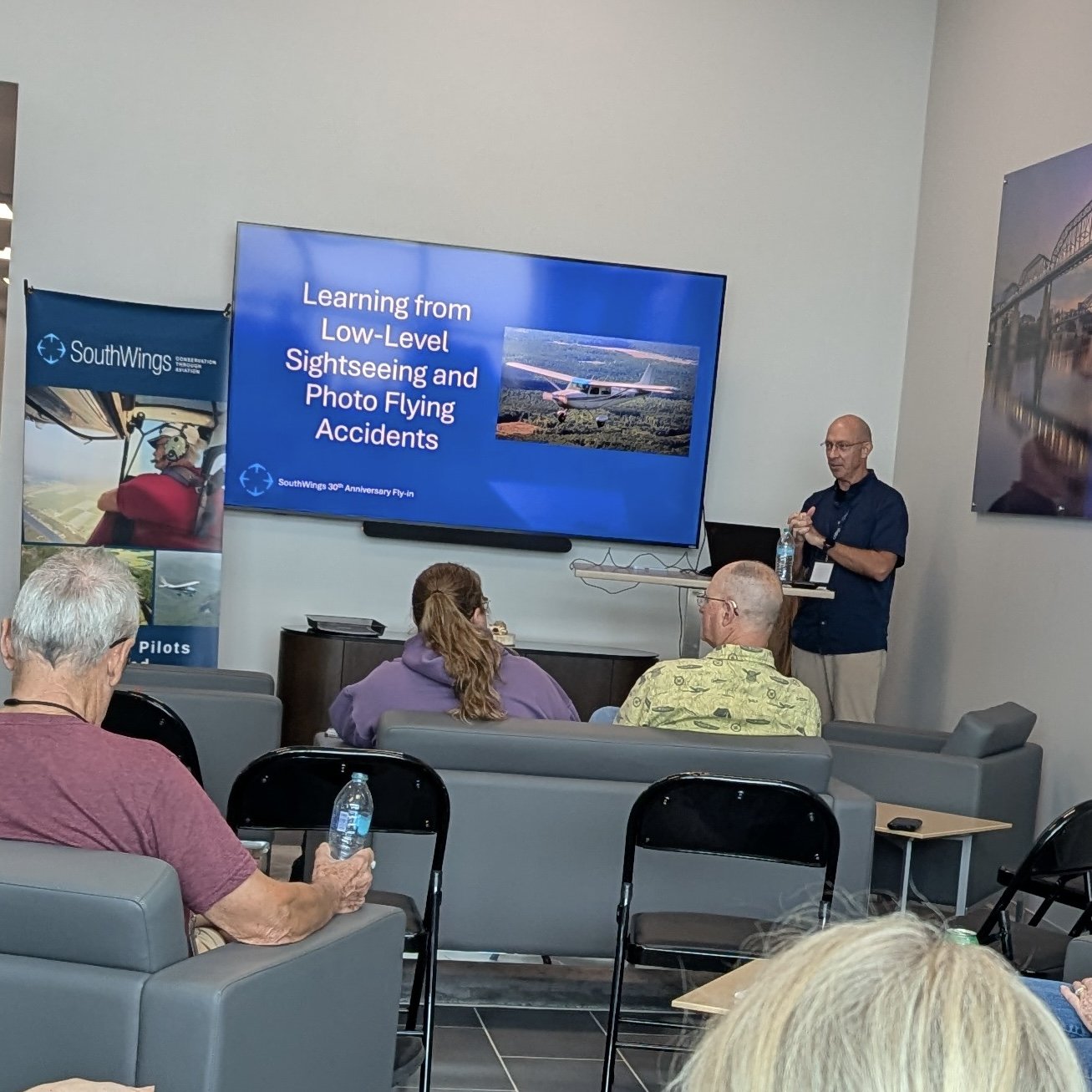
The presentation took place where we all landed for the fly-in, Chattanooga Metro Airport, specifically the Wilson Air FBO. I’m a big fan of Wilson Air. The FBO was started by Holiday Inn founder Kemmons Wilson, and its Houston location has been my go-to FBO at Hobby Airport for many years. Wilson hosted us in their new northern hangar and lobby space at Chattanooga.
When SouthWings asked me to do a presentation, my first thought was to update and rehash one of my favorite prior presentations, Stick & Shudder: Pilot Tricks that Make us Cringe. That presentation sought to convey some flying wisdom by reviewing some bone-headed pilots decisions/stunts over the years. While that would have been fun, I decided something more SouthWings-specific would be more appropriate. Because almost all SouthWings flying is targeted sightseeing (educating decicion-makers, journalists, etc. on environmental issues from the sky) or photo flying, it’s all done from a low level, often 1500’ AGL or below. So, I settled on a collection of lessons unique to low-level flying, drawing on accidents and incidents (usually as described in NTSB or NASA reports — NASA reports allow pilots to self-report incidents anonymously to a NASA database for use by others as learning tools).
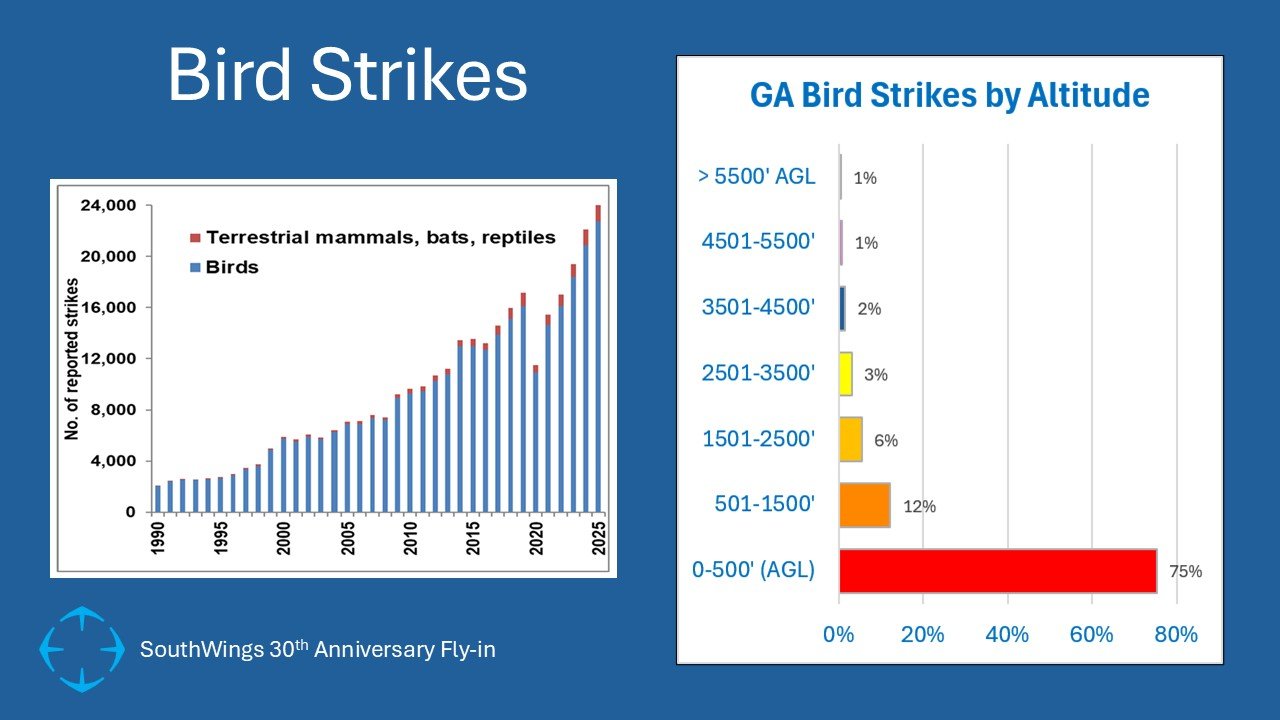
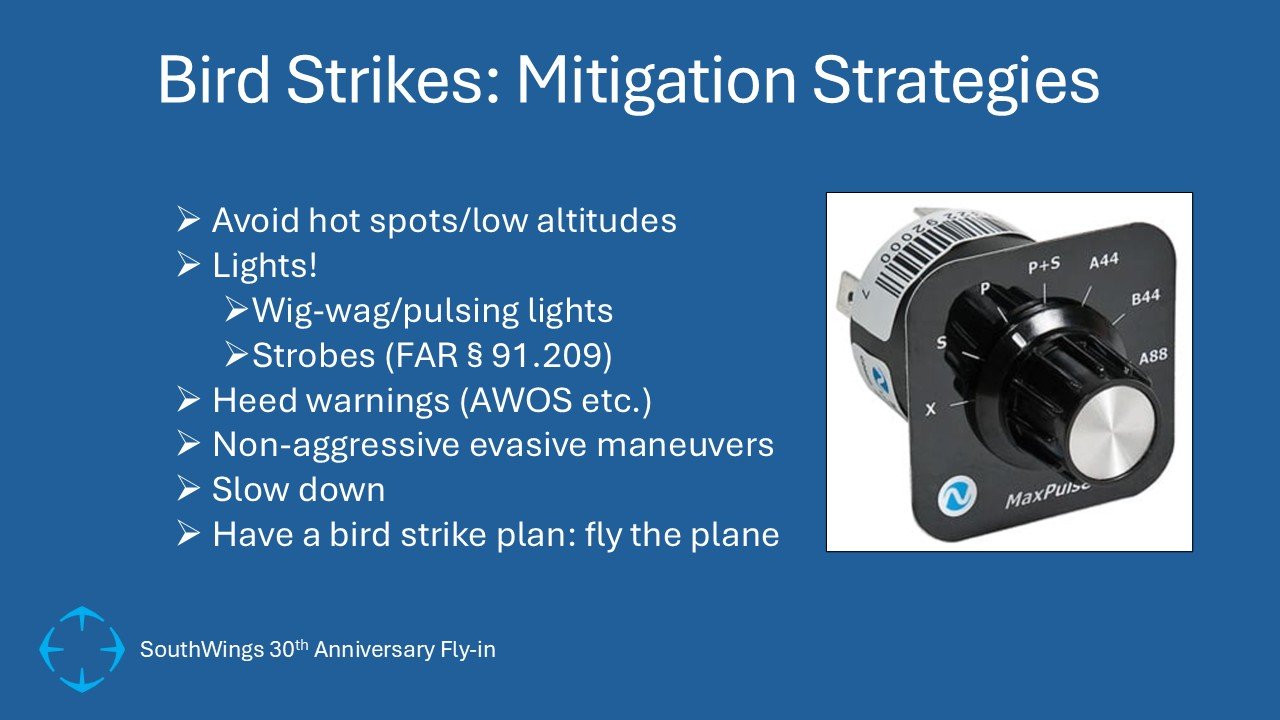
We discussed bird strikes, distractions, obstacles, other low-level flying dangers, and traffic. Bird strikes are a constant threat for low-level flying. The April 2025 NYC sight-seeing helicopter crash was caused by a bird strike, and caused the NTSB to re-emphasize the use of “wig-wag” or pulsing lights, which deter birds.
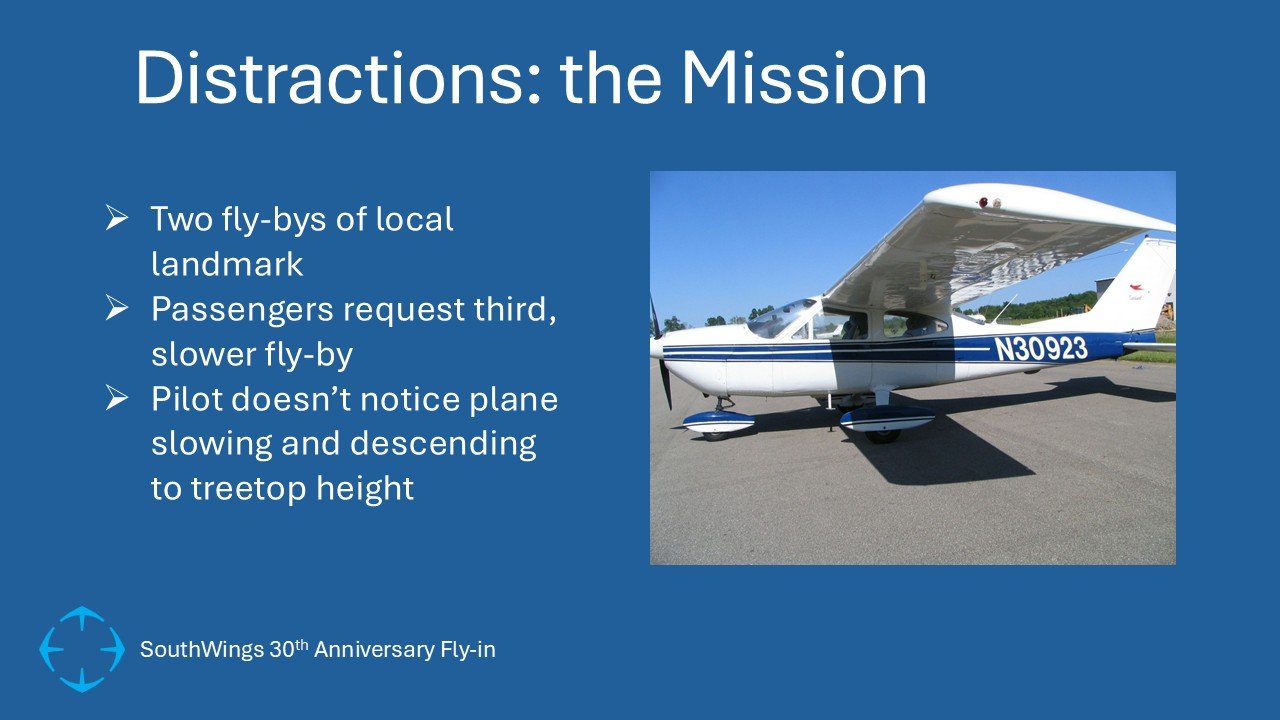
Distractions are not unique to low-level flying, but they’re ever-present when you’re carrying passengers and can have more dramatic consequences when they impact a low-level flight. I told my favorite aviation distraction anecdote — the regional jet captain who, frustrated by a lone mosquito that appeared in the flight deck on final approach, missed the mosquito but managed to swat a number of switches with some rolled-up flight papers, including the improperly-unguarded oxygen mask deployment switch. We discussed open doors and windows, and when completing the mission — usually that last photo — becomes the distraction.
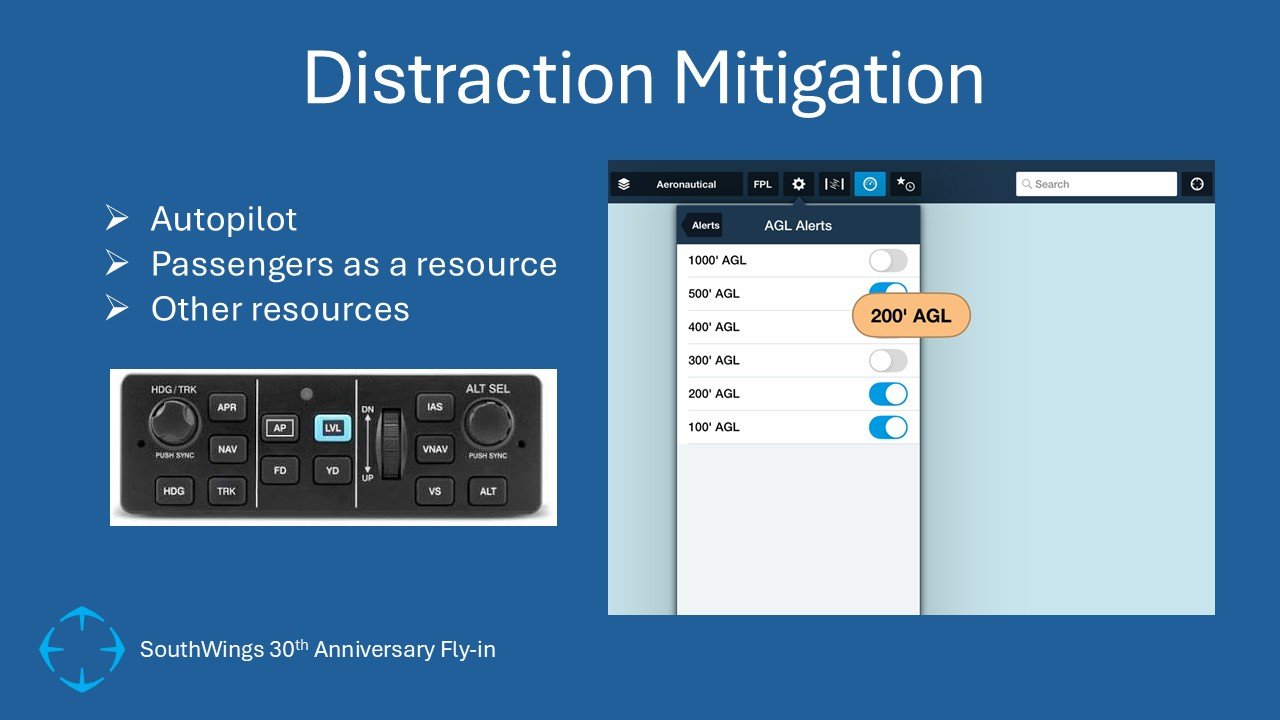
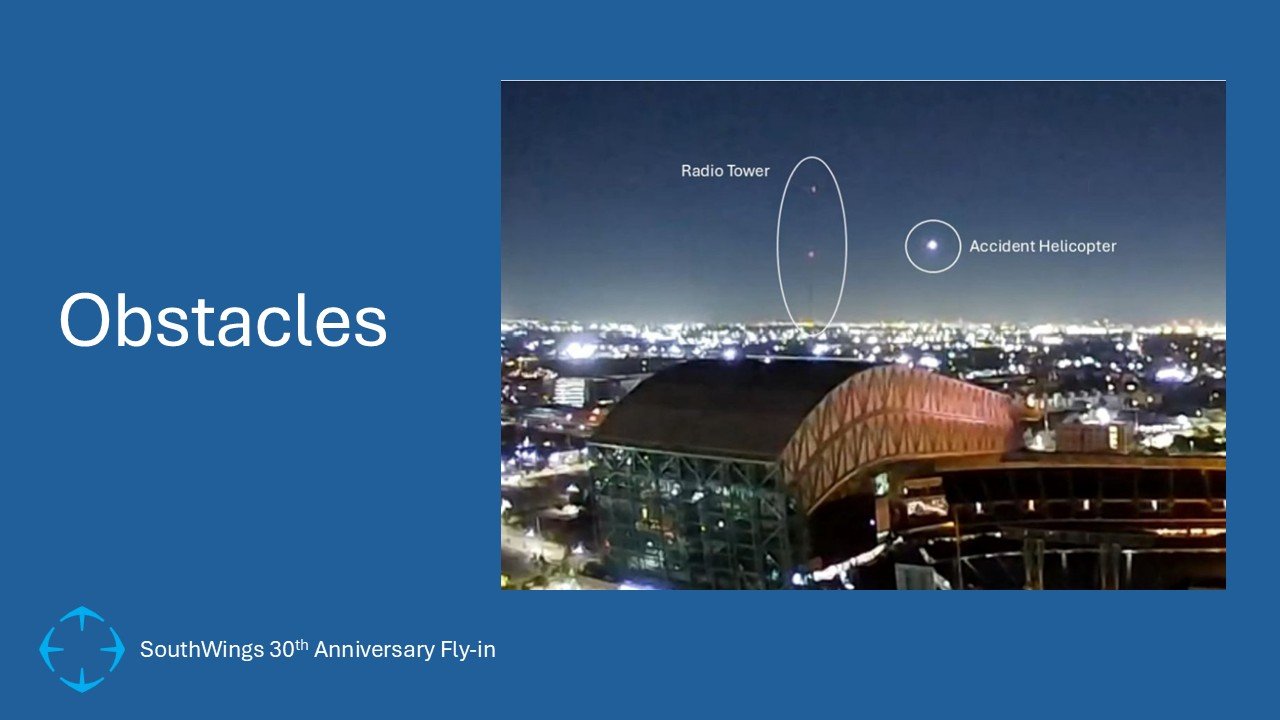
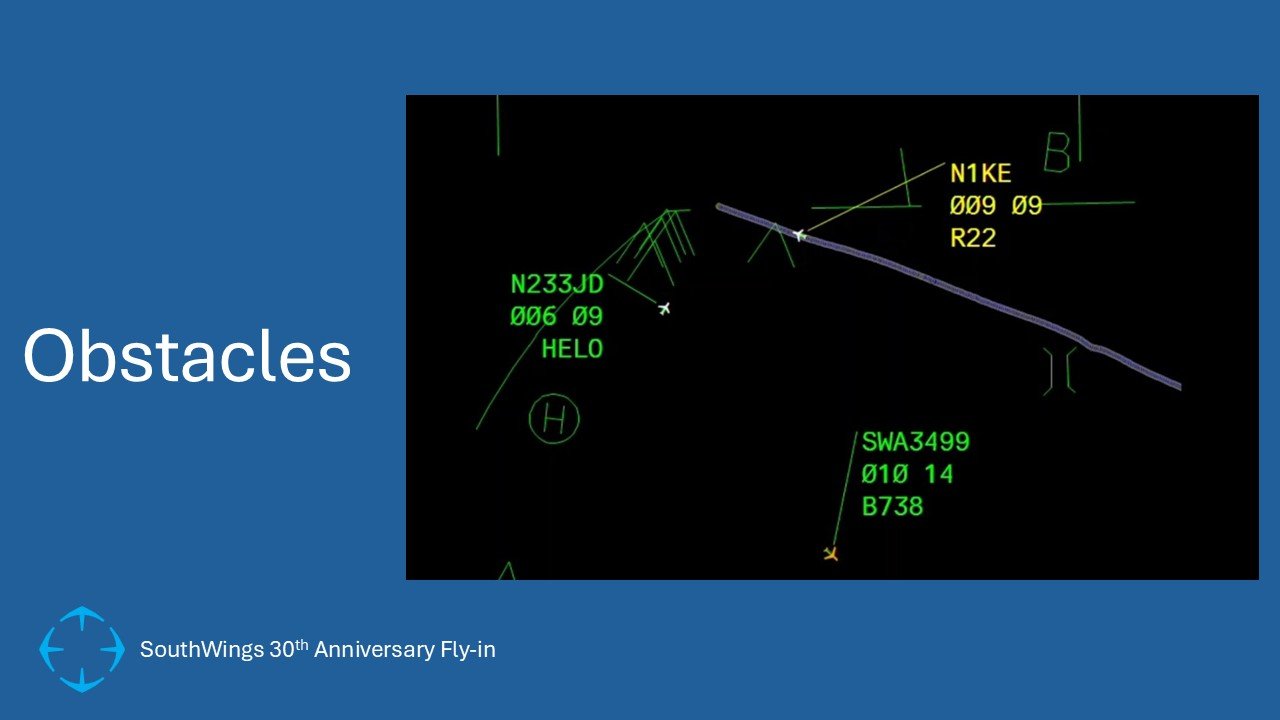
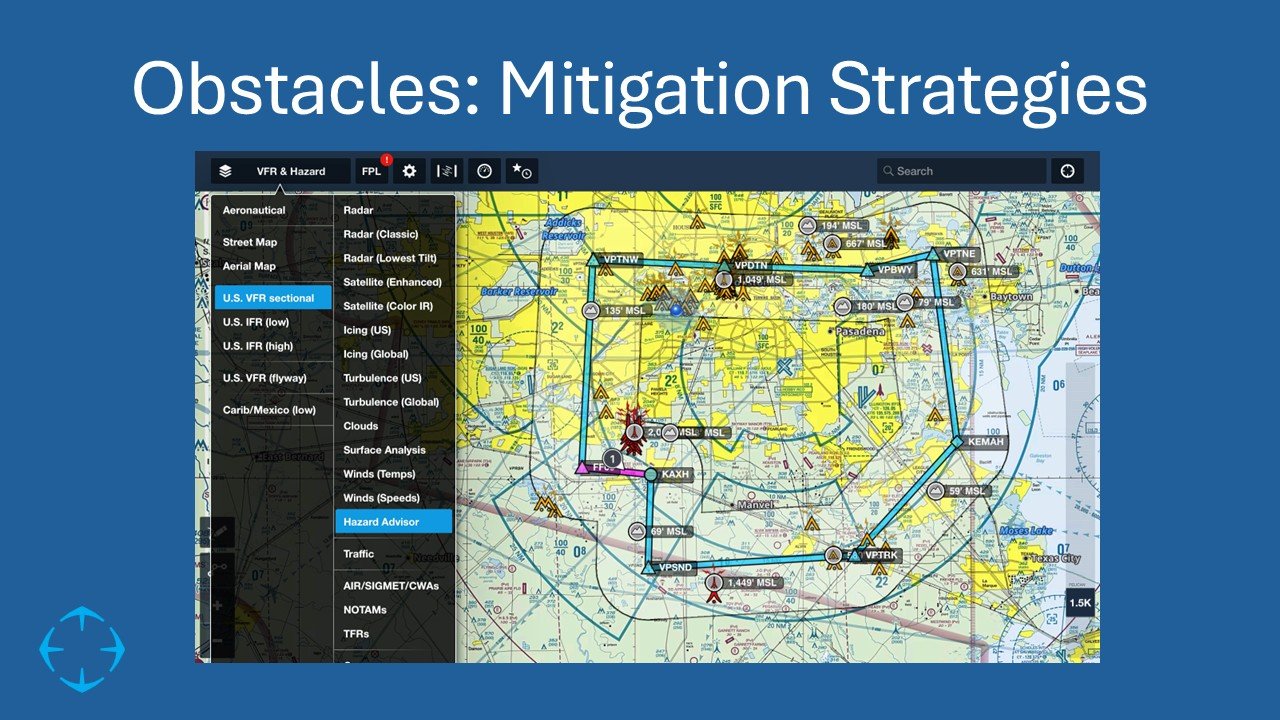
Obstacle avoidance is obviously critical to low-level flying missions, and we took a look at the sightseeing helicopter crash in Houston in 2024, when ATC’s call-out of nearby traffic distracted the pilot, who inadvertently flew the helicopter into a radio tower.
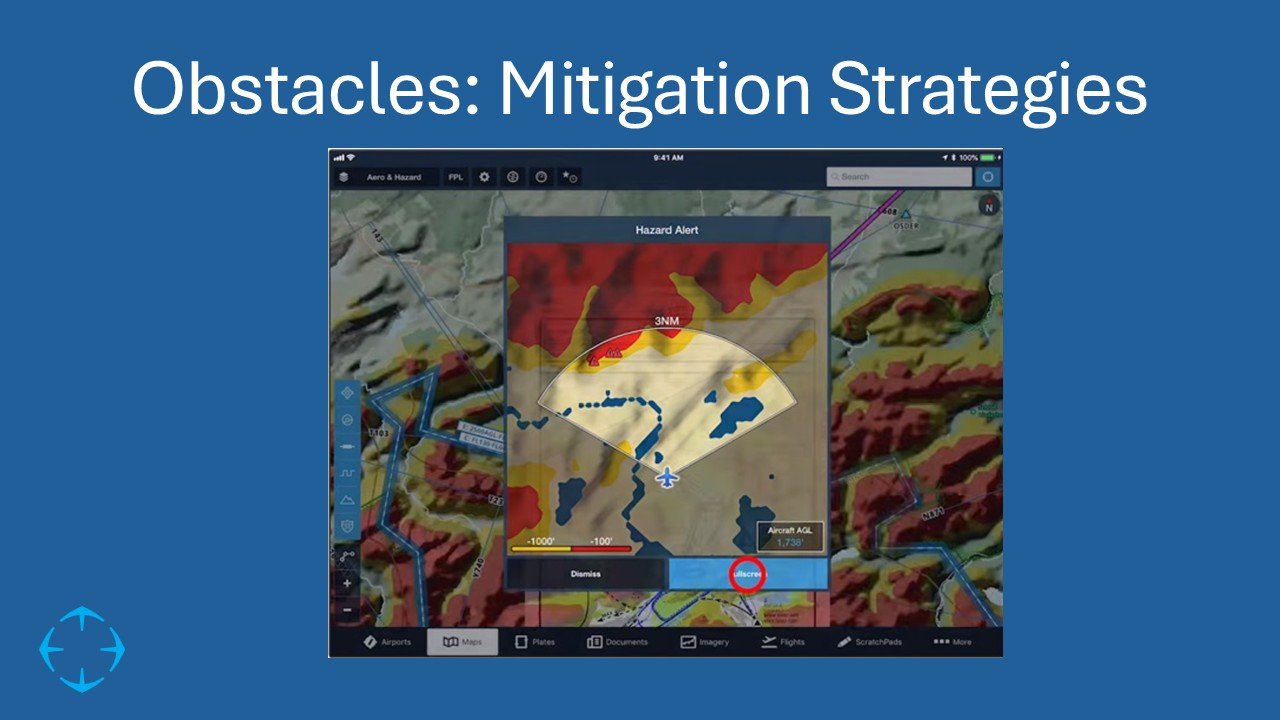
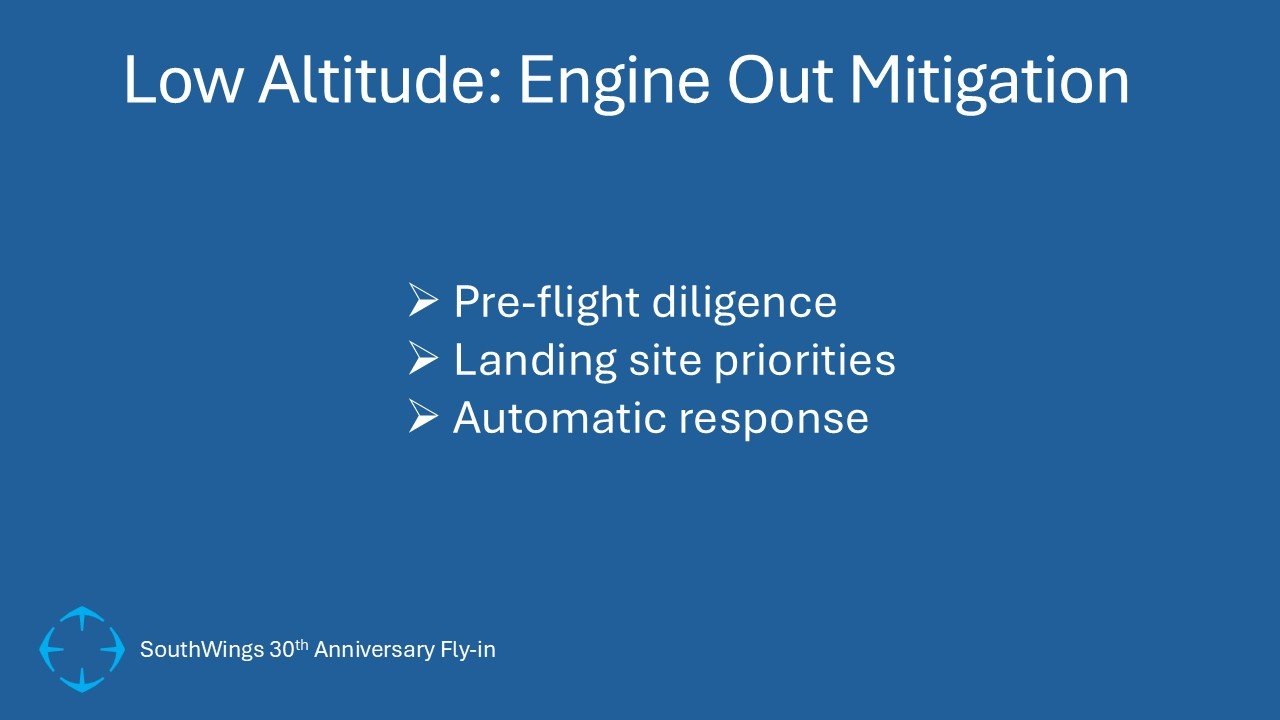
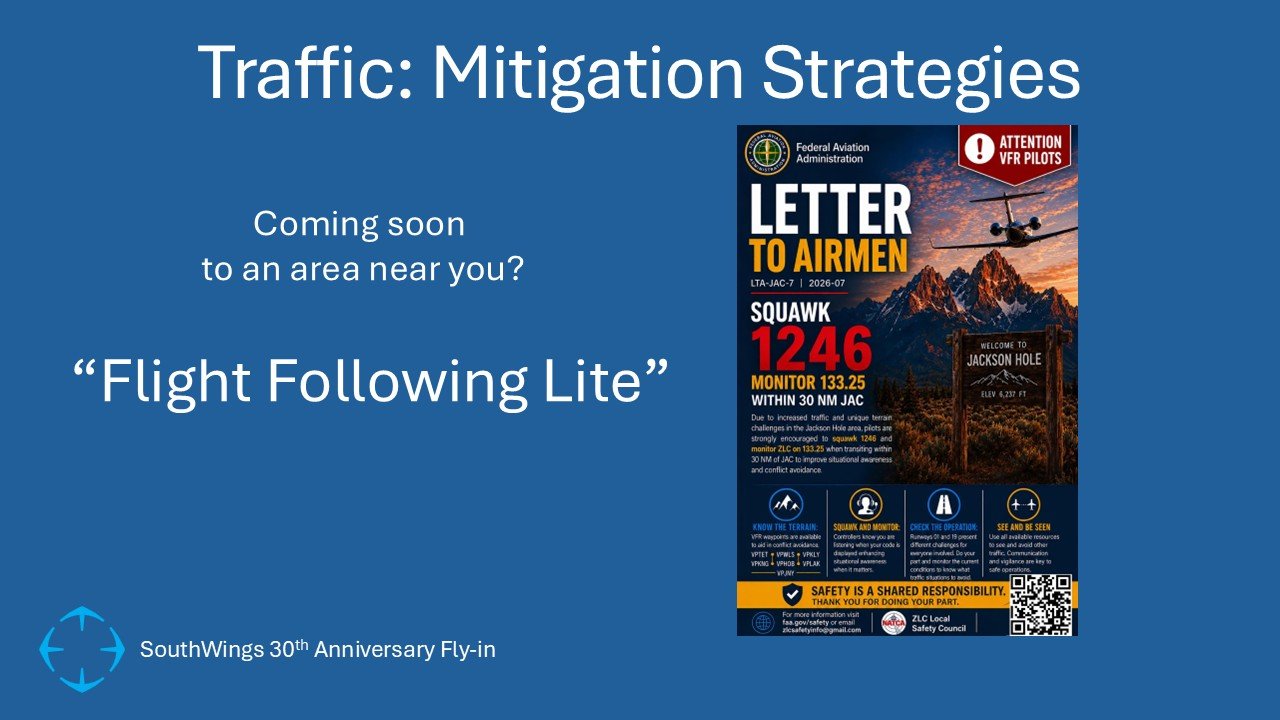
Finally, we discussed some other low-level flying issues, such as engine-out mitigation, and concluded on the subject of traffic and traffic avoidance, including the novel (and still not widely distributed) system that pilots are calling “Flight Following Lite.”
You can access the full powerpoint presentation here. For a PPT file with the animations and video, email scott@humphriesaviation.com.
The presentation was fun to give, and my thanks to SouthWings for the opportunity.