500 Airports!
As I lined up on a five-mile final, Miami International’s tower called out, “Bonanza 3738R, cleared to land runway 8 left number two behind the American 737, keep your speed up, caution wake turbulence.”
As my wheels chirped, I tried to suppress a big grin. While it’s always satisfying to pilot a Bonanza amongst the heavy metal at our nation’s busiest hubs, this landing was special to me for another reason: MIA marked the 500th airport in my logbook. The current map’s below, with an interactive version available here.
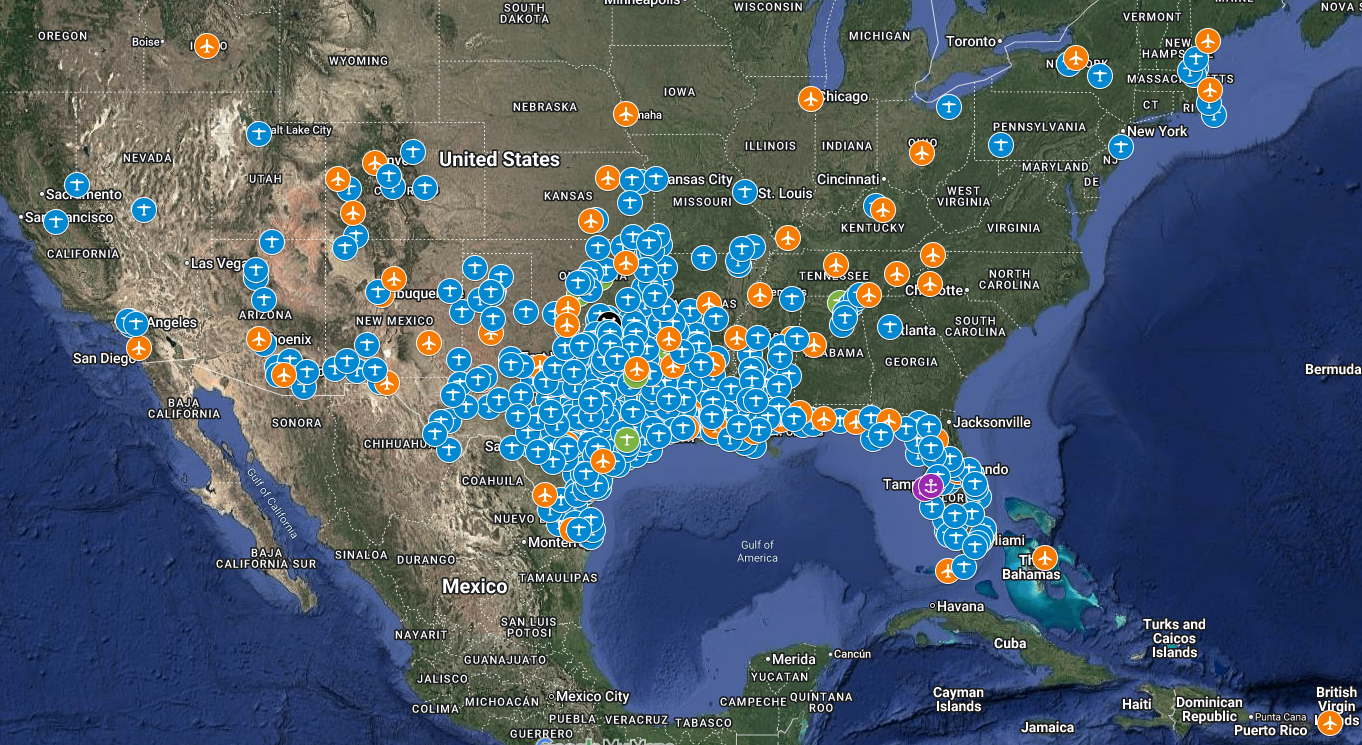
To be sure, this milestone checked no experience box, satisfied no rating or currency or insurance requirement, and mattered not a whit to anyone else. But it was meaningful enough for me to tally over the years, to pick a festive setting for number 500, and to pen these pages to encourage our ABS community to keep track of and savor all the places we’ve been.
Logging landings at 500 airports isn’t hard if you aviate long enough (34 years for me), and my pace got a boost from why and how I fly. First, flying for Angel Flight South Central from my home base in Houston takes me regularly to myriad small airports across Texas, Louisiana, Oklahoma, and Arkansas to further Angel Flight's mission to provide free flights to medical care for patients in remote areas. Collecting patients from rural locales has contributed significantly to the 500.
Second, my family’s repeat destinations all but require fuel/comfort stops, and I usually try a new location each trip. As a result, and apparent on my map, I’ve landed at most of the airports between Houston and Tucson (visiting my parents), Houston and Miami (our older son), and Houston and Colorado (friends).

With Angel Flight Passengers Ronnie and Peggy in Poteau, OK (RKR)
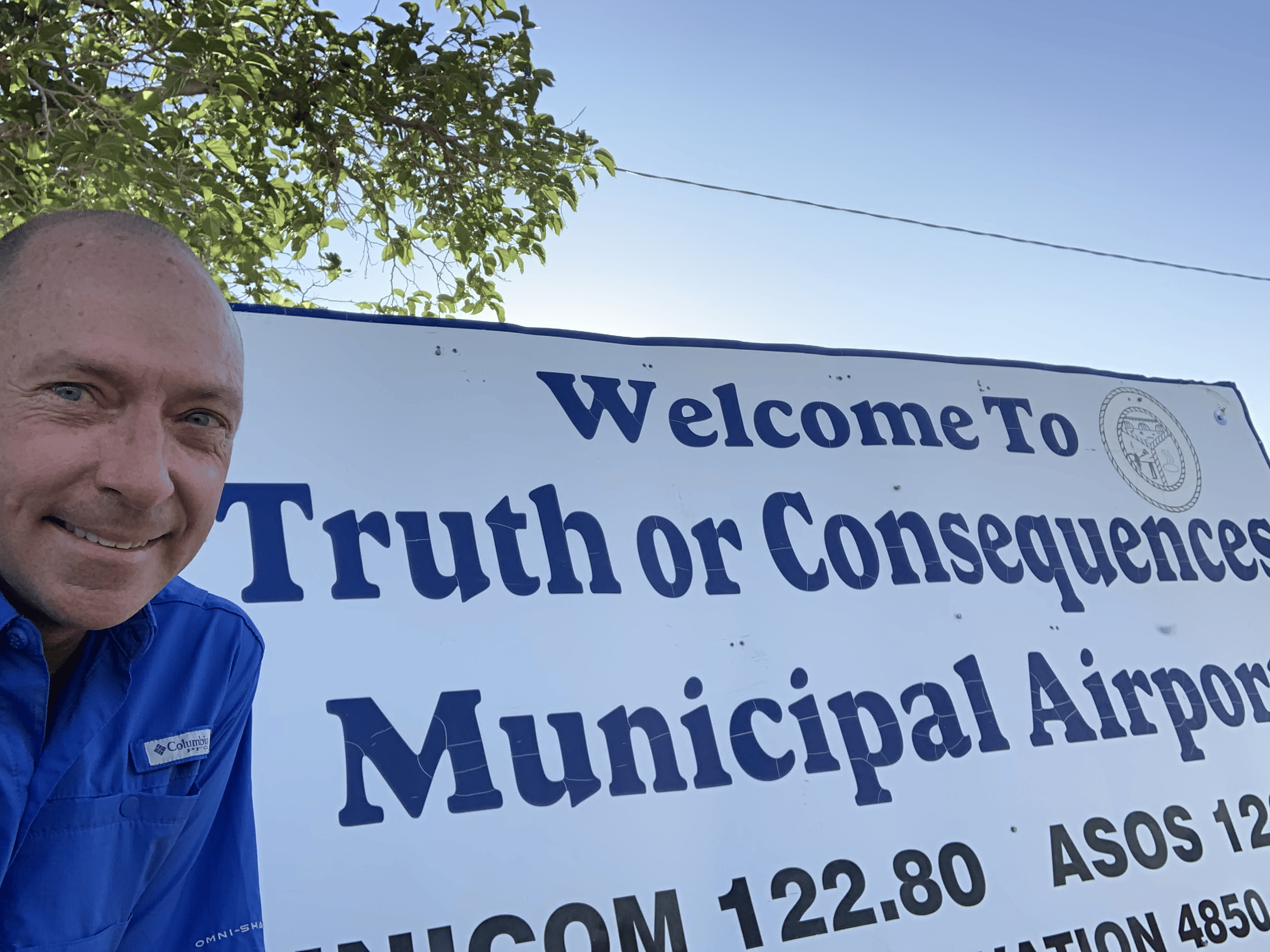
Fuel stop in Truth or Consequences, NM (TCS)
The Bonanza’s versatility also makes it easy to log new airports. 3738R is as happy on the tarmac as she is on the fescue of the dozen soft fields in my logbook. Over the 24 years we’ve flown her, 3738R has enabled more than 400 of my airport visits. Of course, some backcountry and similar airstrips won’t accommodate an A36, but I can’t recall ever turning down an adventure because the Bo wasn’t right for the runway.
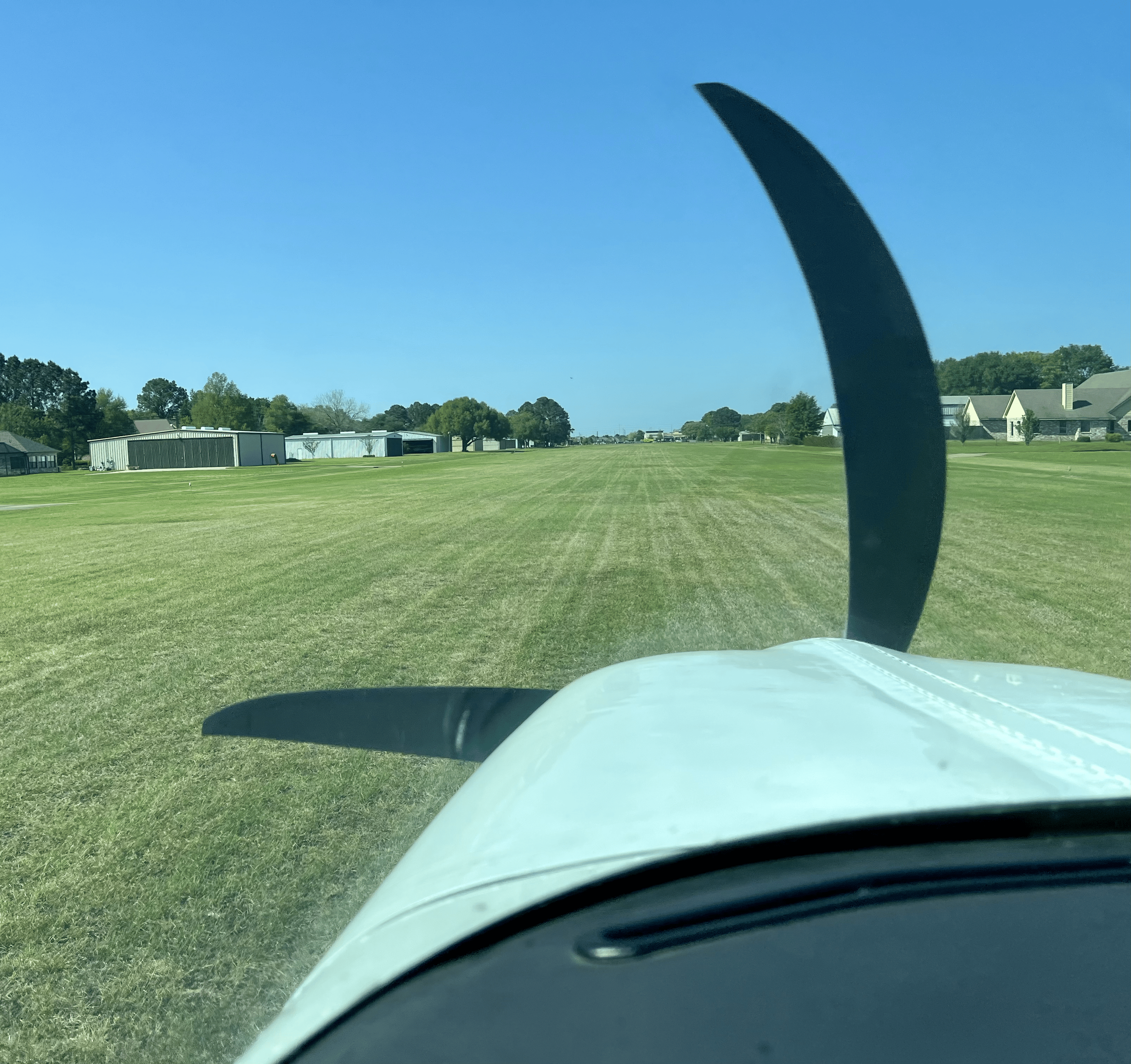
On the fescue at Covey Trails, TX (X09)
Finally, it’s just fun to explore. For example, one trip last month led to multiple airport stops when my wife Stacy and I flew to Orlando to watch our younger son’s Hamilton College baseball team play during their extended spring break. On one of the team’s days off, Stacy and I flew from our temporary base in Kissimmee (ISM) to Venice (VNC) for the short walk to lunch at Sharky’s on the Pier. Also between games, my cousin, a young, Orlando-based CFI, joined me to buzz around central Florida, helping him build some non-172 hours. Among other stops, we landed at Space Coast Regional (TIX) near Cape Canaveral to check out the FBO’s extensive collection of astronaut memorabilia.
Those 500 airports can be sliced and diced many ways. Some are high (LXV in Leadville, CO, 9934’), some low (GAO in Galliano, LA, elev. 0’). Some wide (SPS in Wichita Falls, TX, 300’), some most certainly not (7XS0 Polly Ranch, TX, 24’). Some long (ABQ in Albuquerque, NM, 13,793’), some short (2B2 on Plum Island, MA, 2105’). Most domestic, a handful international (e.g. Nassau, MYNN). Most public, some private (e.g. Cibolo Creek Ranch, TS15). Only three FAA-licensed spaceports (TIX, Ellington Field EFD, and Midland MAF)!

Packing Hurricane Ida supplies for delivery to Galliano, LA (GAO)

With Stacy at Cibolo Creek Ranch, TX (TS15)
The Bravos on the list (DFW, IAH, HOU, MIA, PHX et al.) demand situational awareness and radio skills. So, too, do those memorable smaller airports constantly enduring frequency-clogging volumes of flight training and other GA traffic, like Dekalb-Peachtree (PDK) in Atlanta and South Valley Regional (SVR) in Salt Lake City.
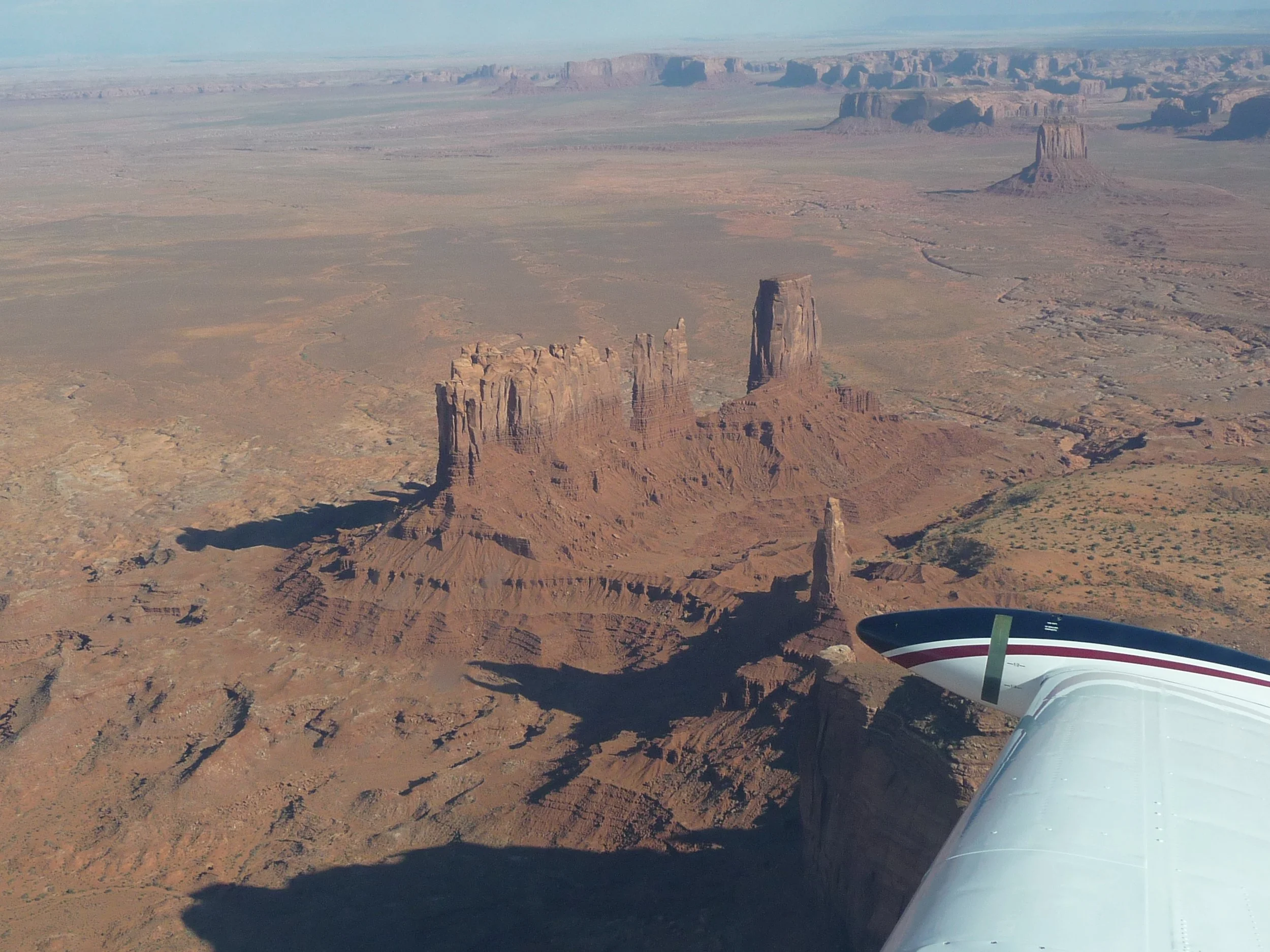
Over Monument Valley headed to busy Salt Lake City’s South Valley Regional Airport (SVR)
A quite different class of airfields are so picturesque they made it hard to concentrate on flying or the radio, like Sedona (SEZ), Key West (EYW), Grand Canyon (GCN), and Cedar Key (CDK). A subset of those mesmerizing runways tested this flatlander’s mountain flying skills: Telluride (TEX), Sun Valley (SUN), Eagle/Vail (EGE), and Lake Tahoe (TVL).
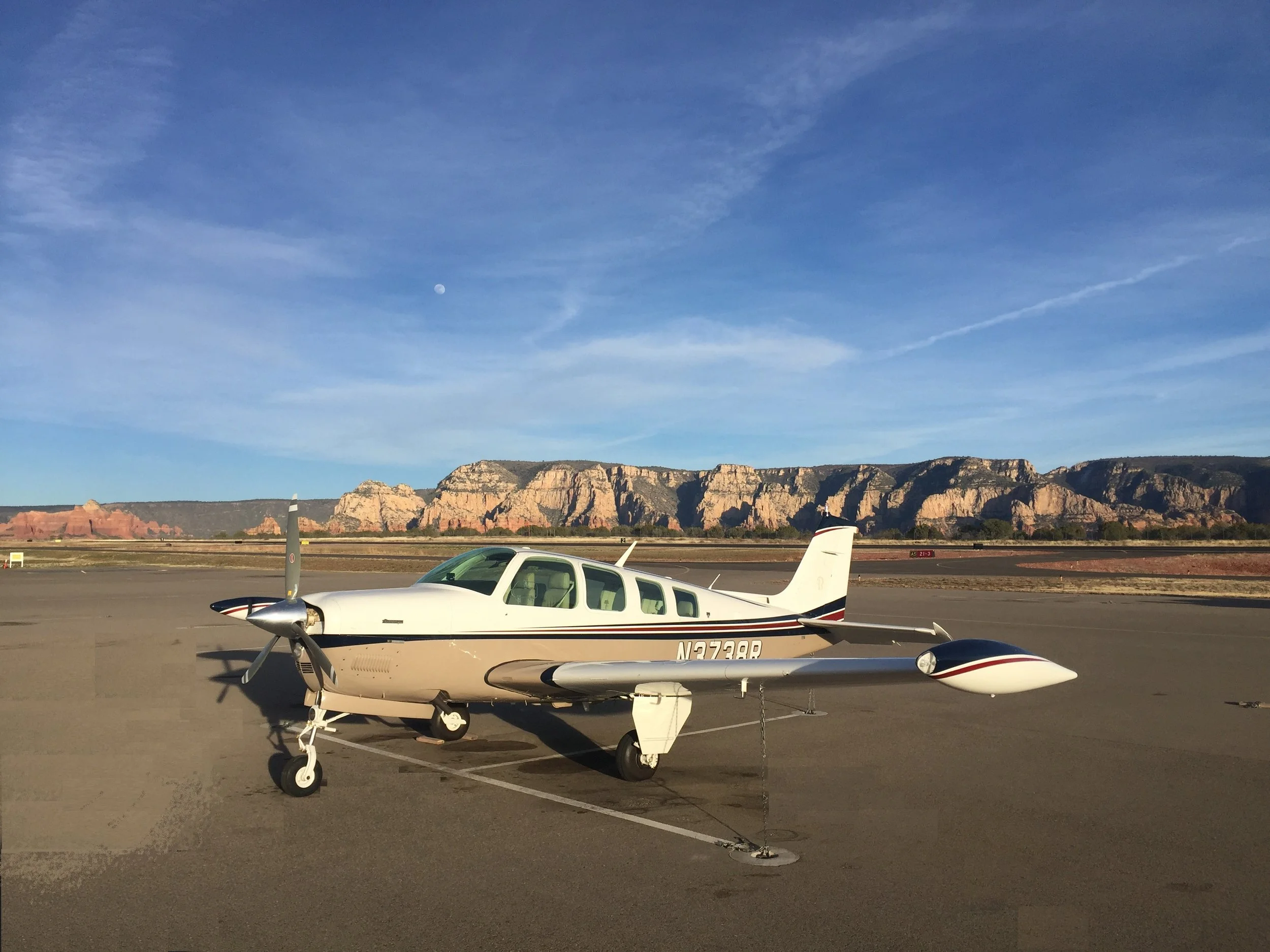
Sedona Airport, (SEZ) a bucket list site.
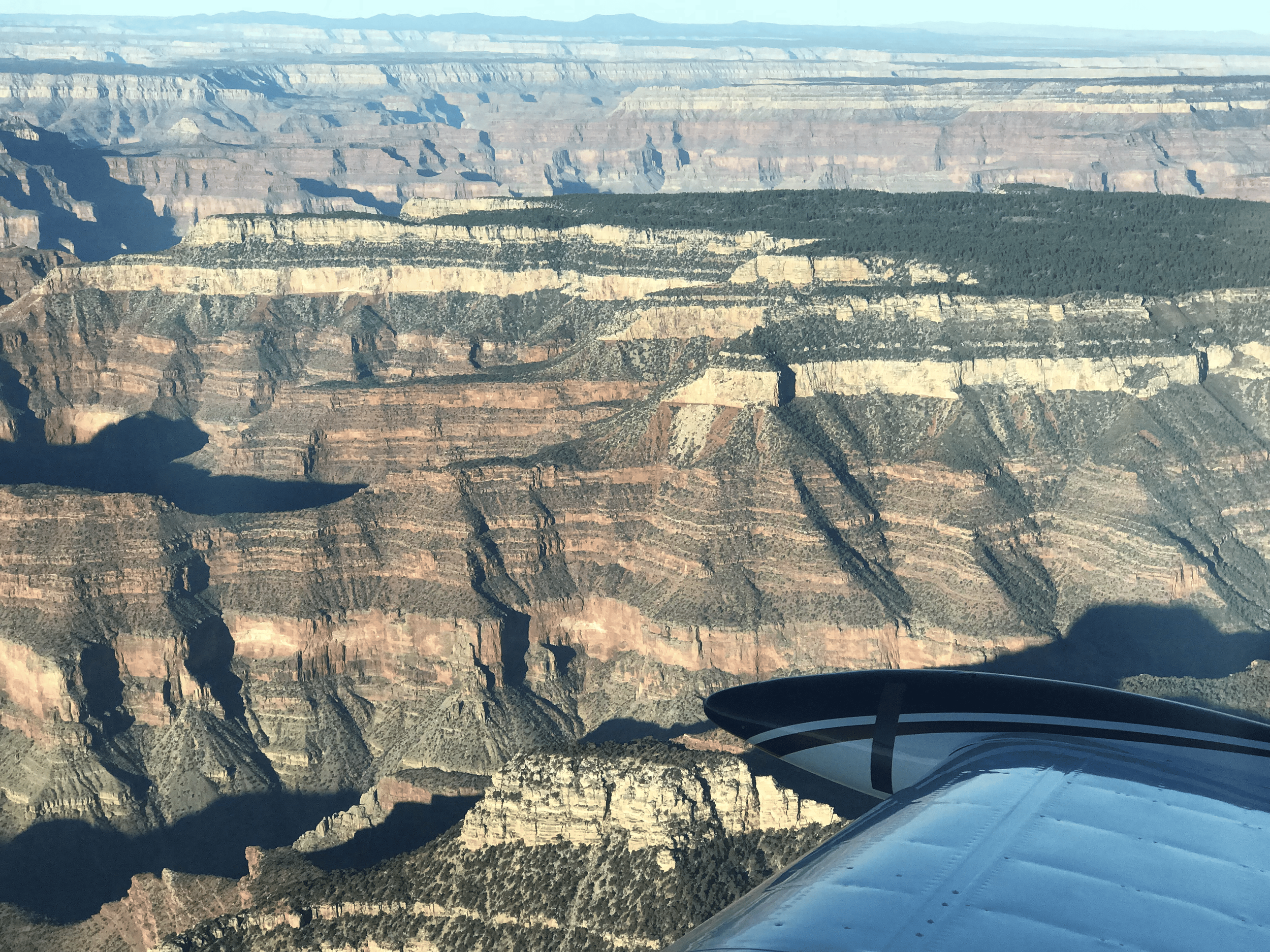
Over the Grand Canyon, near GCN.
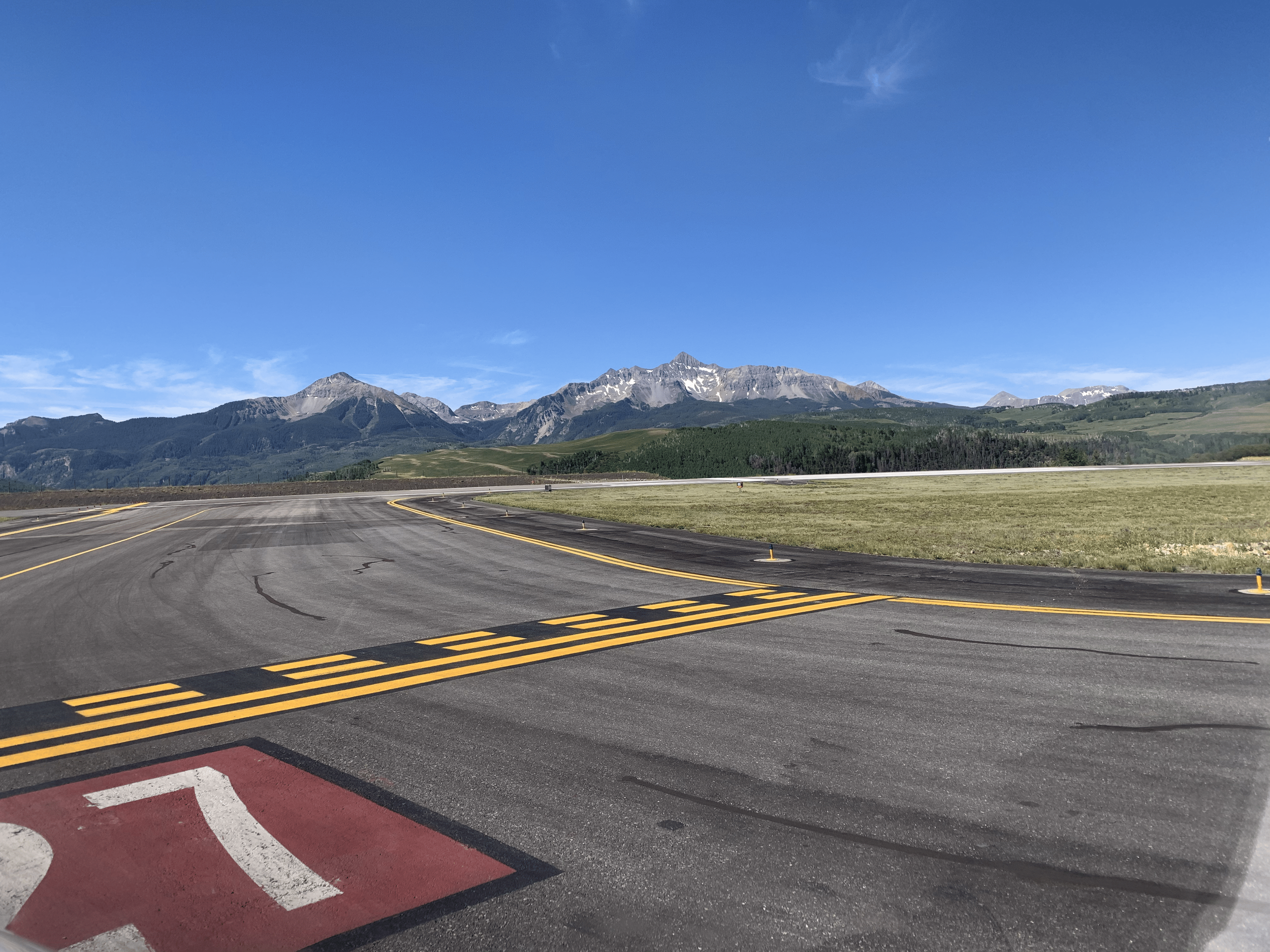
Awaiting takeoff at Telluride (TEX).
Of course, no logbook is complete without $100 hamburger runs, and plenty of the 500 are all about food. Lockhart Municipal (50R), for example, welcomes pilots to its namesake, the official BBQ capital of Texas. For many years our two young boys tolerated their dad’s flying habit to score chocolate chip pancakes at Brenham’s (11R) Southern Flyer diner and Conroe’s (CXO) Black Walnut Café, both a short hop from home. Further west, two of the best breakfast burritos on earth can be found in the Crosby Flying Services FBO self-serve refrigerator at Pecos Municipal (PEQ) in west Texas on the way to Arizona, and, once you get there, at the Sky Rider Café at Marana, AZ (AVQ).
Some of the 500 reflect milestones in my flying career. Georgetown, TX (then T04, now GTU), where I learned to fly in 1992, breeds nostalgia. As does Flyin’ Tiger (81D), where legend Bruce Bohannon taught me to fly a tailwheel and panned my first grass landings. Landing 3738R at Beech Factory Field (BEC) for the ABS Convention shortly after buying her in 2002 felt like a homecoming.
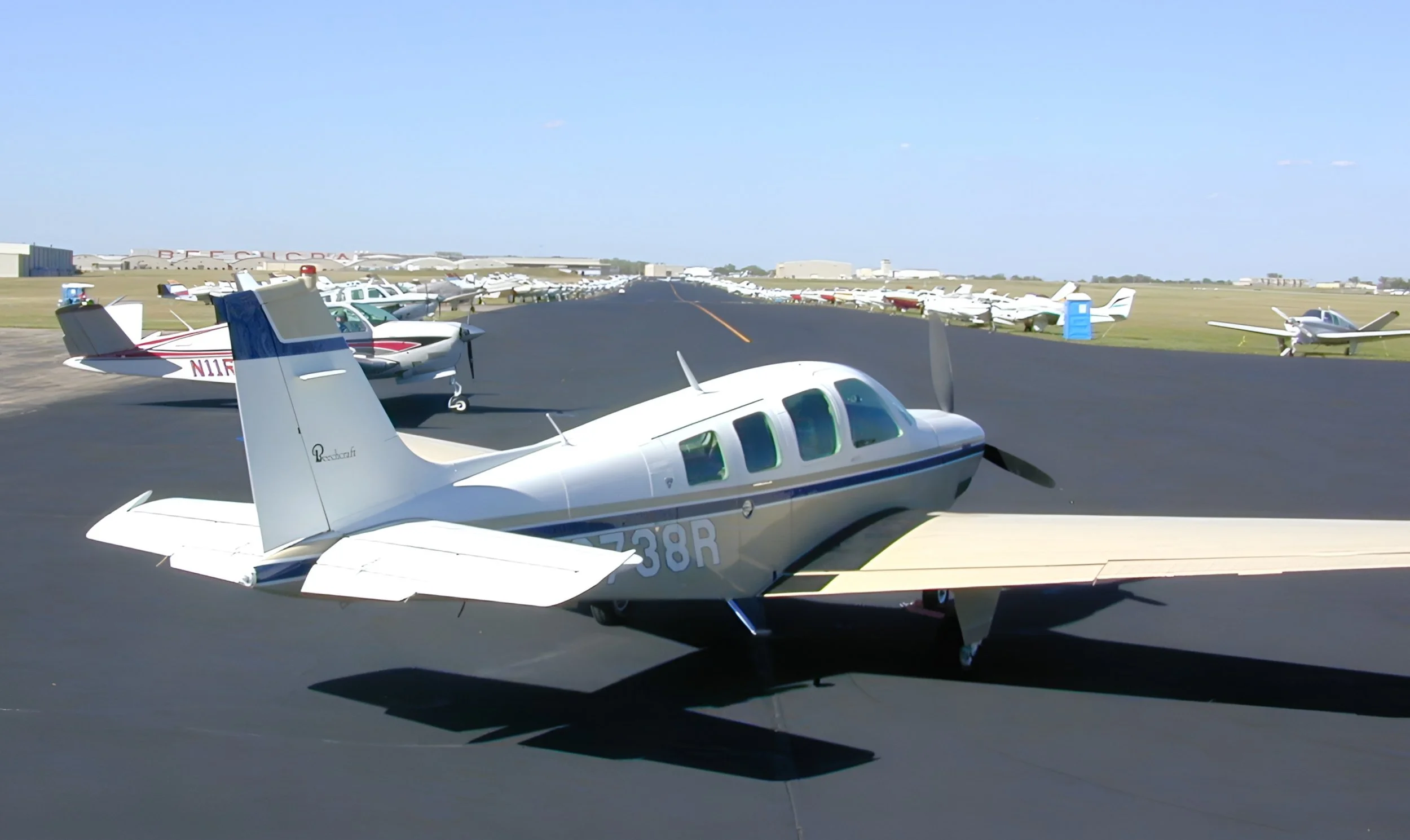
At the American Bonanza Society Convention at Beech Factory Field (BEC)
Quite a few of the 500 featured our armed services aircraft at work. Most were joint civilian/military airports, such as Wichita Falls (SPS), Gulfport (GPT), and Colorado Springs (COS), as well as Ellington Field (EFD) in Houston, where NASA’s T-38s routinely scream overhead. Only once have I logged an otherwise forbidden military field, when Randolph Air Force Base (RND) hosted a safety briefing on its use of the surrounding San Antonio airspace. If you get the chance for such a visit, take it.
Sadly, a growing number of airports in my logbook no longer exist. Perhaps the most prominent is Austin’s Robert Mueller Municipal, the original AUS before nearby Bergstrom Air Force Base was converted to civilian use in 1999. A half dozen smaller fields, mostly around Houston and Dallas, have also been gobbled up by urban sprawl (e.g. Houston’s Weiser Airpark, EYQ, closed in 2019). The most recent casualty from my logbook is Lake Texoma State Park Airport (F31), bulldozed in September 2025. My home airport, Houston Southwest (AXH), is for sale; I have some concern it may end up in this bucket.

Sunset on Runway 27 at Houston Southwest (AXH)
No matter the breadth of your travels, curating a map of where you’ve flown is as rewarding as flipping back through your logbook, recalling fun trips and times in the air. Indeed, the popularity of ForeFlight’s “Recap” feature, which plots your year’s flights each December, attests to the satisfaction of reflecting on our travels.
I keep my logbook on paper and in ForeFlight and Excel, making crunching airport data easy. I map landings in a Google Map with aircraft icons. Exporting that map as a KML file and importing it to ForeFlight as a custom layer makes planning a novel gas stop simple. Popular electronic logbooks MyFlightbook and LogTenPro will also map your landings, as will OurAirports.com.
Keeping track of where you’ve flown can have tangible benefits: the Virginia Aviation Ambassador Program promotes general aviation by providing patches and even a leather jacket if you touch down on enough Virginia runways, for example. South Dakota, Arkansas, North Carolina, Maryland, Massachusetts, Minnesota, Oregon, and New Jersey have similar programs. Unfortunately, Texas doesn’t. Even if it did, making a clean sweep of the Lone Star State’s almost 400 public use airports would be an ambitious endeavor (I’m not even close, at 227).
For me, though, visiting new airports isn’t about earning a patch, but rather exploring different and interesting places. To be able to look back and remember that scenic approach over the water, that engaging passenger from a sleepy rural airfield, that charming, out-of-the-way FBO, the hustle of a sprawling international airport. To enjoy such history, I encourage everyone to keep tabs of where you’ve been.
And, too, where you’ll go. Every pilot should have an airport bucket list. I have big plans for my next 500, including icons Catalina Island (AVX) and First Flight Airport at Kill Devil Hills (FFA). What does your map look like, and where are you headed next?
[NOTE: The American Bonanza Society expects to publish this article in its June 2026 issue of ABS Magazine.]